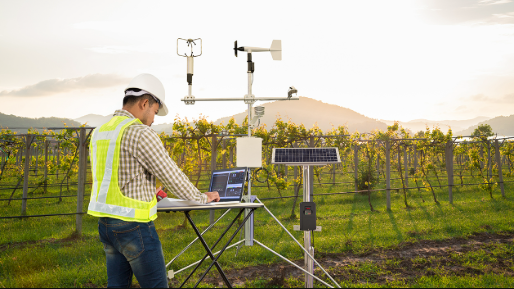
The Role of Technology in Environmental Monitoring
Technology significantly transforms environmental monitoring by enhancing data collection and analysis. Advanced tools like satellite imagery and remote sensing provide critical insights into ecosystem changes. These innovations enable real-time assessments of environmental conditions, thereby improving stakeholder decision-making. However, the impact of these technologies extends beyond mere observation. Understanding their implications and potential applications reveals a complex interplay between technology and environmental stewardship. What challenges and opportunities arise from this integration?
Advancements in Satellite Imagery for Ecosystem Monitoring
Recent advancements in satellite imagery have significantly enhanced the capabilities of ecosystem monitoring, providing researchers and environmental managers with unprecedented levels of detail and accuracy.
Satellite resolution improvements facilitate the capture of finer ecological details, while cloud-based processing enables rapid analysis of vast data sets.
Together, these innovations empower stakeholders to make informed decisions, fostering a deeper understanding of ecosystem dynamics and promoting sustainable practices.
Utilizing Remote Sensing Technologies to Track Environmental Changes
As environmental changes occur at an unprecedented pace, utilizing remote sensing technologies has become essential for monitoring these transformations effectively.
Drone surveillance offers high-resolution imagery, enabling real-time assessments, while GIS mapping facilitates the analysis of spatial data.
Together, these technologies empower researchers and environmentalists to track deforestation, urbanization, and climate shifts, ultimately fostering informed decision-making and promoting sustainable practices in response to environmental challenges.
See also: zonapk
The Role of Data Analytics in Environmental Decision-Making
The integration of remote sensing technologies into environmental monitoring has generated vast amounts of data, necessitating sophisticated data analytics to enhance decision-making processes.
Predictive modeling techniques allow for the identification of trends and potential future scenarios, providing vital decision support for policymakers. By leveraging these analytical tools, stakeholders can make informed choices that prioritize environmental sustainability and foster a proactive approach to ecological challenges.
Case Studies: Successful Applications of Technology in Environmental Monitoring
While numerous technologies have been implemented in environmental monitoring, several case studies illustrate their successful application in addressing specific ecological issues.
Drones usage has enabled precise mapping of deforestation, while sensor networks facilitate real-time monitoring of air and water quality.
These advancements not only enhance data collection but also empower communities, fostering a proactive approach to environmental stewardship and sustainable management.
Conclusion
In conclusion, technology serves as a vigilant sentinel in the realm of environmental monitoring, illuminating the shadows of ecological change with its precise tools and methodologies. By harnessing the power of satellite imagery, remote sensing, and data analytics, stakeholders can navigate the complex landscape of ecosystem health, making informed decisions that resonate like ripples across the fabric of nature. Ultimately, embracing these technological advancements not only fosters collaboration but also sows the seeds for sustainable stewardship of our planet’s precious resources.