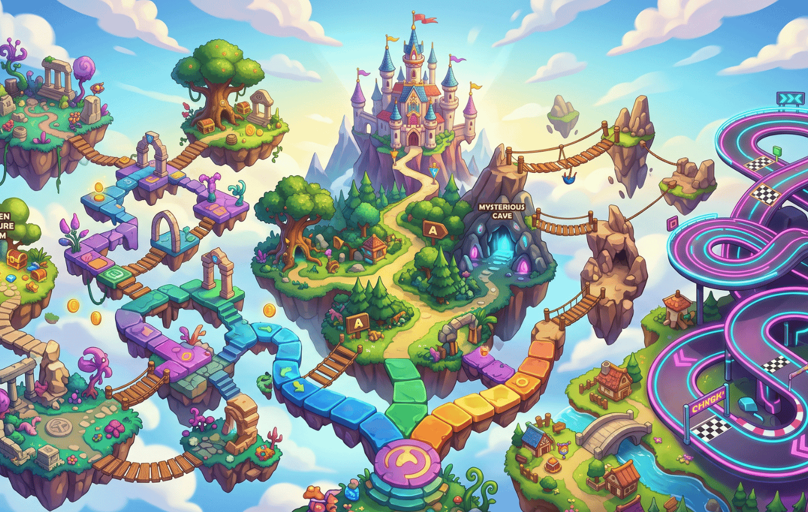
From Bored to Obsessed: Games That Hook You in the First 5 Minutes
The first five minutes can decide whether a player stays or leaves.
A game may have beautiful graphics, a large world, and hundreds of hours of content, but none of that matters if the opening feels slow, confusing, or boring. Players want to understand what they are doing quickly. They want the controls to feel responsive, the objective to be clear, and the first few actions to produce a satisfying result.
The best games do not need a long introduction to become interesting.
They give players a reason to continue almost immediately. That reason may be a powerful action, a visible reward, a surprising challenge, or the feeling that the next attempt could be better than the last one.
A strong opening does not mean the game is shallow. It means the game knows how to introduce its best qualities without wasting the player’s time.
Why the First Five Minutes Matter
Players form opinions quickly.
During the opening minutes, they are asking themselves:
- Do I understand what to do?
- Is this fun?
- Do the controls feel natural?
- What happens if I continue?
- Is there something worth unlocking?
- Can I improve with practice?
If the game answers these questions well, the player is more likely to continue.
If the opening is unclear, the player may leave before seeing the deeper experience. This is especially true for Online Games, where players have many alternatives available and can switch to something else immediately.
A successful opening does not need to reveal everything. It only needs to create enough understanding and curiosity to make the next few minutes feel worthwhile.
The Best Games Start With Action
Long explanations can make a game feel like work.
Players usually understand mechanics faster when they can try them. Instead of reading several paragraphs about movement, combat, or collecting, they should be allowed to perform a simple action and see the result.
This creates a more natural learning process.
A strong opening often follows this pattern:
- Show the player what to do.
- Let them try it safely.
- Give immediate feedback.
- Introducing a small challenge.
- Suggest what can happen next.
This approach makes the player feel capable from the beginning.
The game does not need to explain every system at once. It can introduce advanced mechanics later, after the player understands the basic loop.
Responsive Controls Create Immediate Enjoyment
Controls are often the first real test of a game.
A player may forgive simple graphics or a small environment if movement feels smooth. The opposite is also true. A visually impressive game can become frustrating if inputs feel delayed or unpredictable.
Responsive controls help players feel connected to the experience.
Important qualities include:
- Quick reactions
- Predictable movement
- Clear actions
- Comfortable sensitivity
- Easy-to-understand inputs
- Feedback after every important decision
When controls work well, players naturally want to experiment. They try moving faster, taking greater risks, or testing what the system allows.
That curiosity can create the first strong hook.
A Clear Goal Prevents Early Confusion
Players should understand what they are trying to accomplish.
The goal does not have to be complicated. It might be:
- Reach the end of a level
- Survive for a certain amount of time
- Defeat enemies
- Collect resources
- Build strength
- Beat a score
- Escape danger
- Unlock a new ability
A clear goal gives meaning to the first action.
Without one, the player may move around but feel that nothing matters. Even open-ended games benefit from giving players a short-term objective before allowing them to explore more freely.
The best goals are easy to understand but difficult enough to remain interesting.
Early Rewards Show Players Why the Game Matters
Rewards help connect actions with results.
When a player completes an action and receives something useful, the game teaches them that their decisions matter. The reward may be a new ability, a visual effect, a score increase, or access to another part of the experience.
Early rewards should arrive quickly enough to maintain interest, but not so quickly that they feel meaningless.
Good early rewards can:
- Confirm that the player is progressing
- Introduce a new mechanic
- Improve an ability
- Reveal another goal
- Encourage experimentation
- Make the next attempt more exciting
The reward should support the gameplay rather than distract from it.
A game becomes more compelling when players want the reward because it changes what they can do, not simply because a notification appears on the screen.
Curiosity Is One of the Strongest Hooks
A good opening answers some questions while creating new ones.
Players may wonder:
- What happens if I become stronger?
- What is behind the next stage?
- How difficult will the next challenge be?
- What can I unlock?
- Can I improve my current result?
- Is there another strategy?
Curiosity keeps the experience moving forward.
The game does not need to reveal every feature immediately. It can show enough of the system to make the player imagine what comes next.
This is one reason simple games can be surprisingly engaging. A single mechanic may create many possibilities when the player is not yet sure where it leads.
A Progression Loop Built Around One Big Payoff
One-Punch 100 Layers is described as a power-fantasy progression game where players become stronger with every hit they land. The central goal is to build enough strength for one devastating punch capable of breaking through all 100 layers at once. Its appeal comes from the contrast between gradual grinding and one powerful payoff, while repeated playthroughs allow the player’s strength to grow. The supplied summary presents a simple progression loop with clear feedback and anticipation, but it does not confirm browser access, multiplayer, monetization, or daily reward features.
Why Anticipation Makes Players Continue
Anticipation is different from a reward that appears immediately.
When players know that their current actions are preparing them for something larger, each small step can feel meaningful. They may be collecting resources, improving an ability, reaching a distance, or surviving until a major event.
Anticipation creates a question:
“What will happen when I finally reach the goal?”
This question can keep players involved even when the current action is repetitive.
For anticipation to work, the game needs to make progress visible. Players should understand how close they are and why the final result will matter.
A strong payoff should feel connected to the effort that came before it.
The First Challenge Should Be Easy, But Not Empty
A game should not make the opening impossible. It should also avoid making it meaningless.
The first challenge needs to teach the player how the game responds. It should provide enough resistance to make success feel satisfying, while giving the player room to understand the controls.
Good early difficulty:
- Introduces one problem at a time
- Gives players room to recover
- Makes mistakes understandable
- Rewards careful decisions
- Increases gradually
- Shows how the game will become harder
The player should finish the opening feeling capable but curious.
If the first challenge is too easy, it may feel like a tutorial with no purpose. If it is too hard, the player may never reach the more interesting parts.
Strong Feedback Makes Every Action Feel Important
Feedback tells the player that the game noticed what they did.
It can come through:
- Sound effects
- Animations
- Screen movement
- Score changes
- Visual effects
- Character reactions
- New progress indicators
- Unlock notifications
Good feedback does not need to be loud or excessive. It simply needs to be clear.
When a player lands a difficult jump, defeats an enemy, collects an item, or improves a score, the game should make that moment feel different from an ordinary action.
This creates a rhythm of action and response.
Without feedback, even successful decisions can feel invisible.
Why Simple Games Can Hook Players Faster
Simple games often have an advantage during the opening minutes because they reduce confusion.
Players can understand the main mechanic quickly and start improving almost immediately. There are fewer menus, fewer systems, and fewer rules competing for attention.
This is why casual games can be highly engaging even when they do not offer a massive amount of content.
Simplicity works when the central action is satisfying.
A simple mechanic can create depth through:
- Faster timing
- Greater risk
- New obstacles
- Stronger enemies
- Limited resources
- Different strategies
- Higher personal goals
The player does not need dozens of features to stay interested. They need one action that remains satisfying as the challenge develops.
See also: IT Asset Buyback: How Businesses Had Recovered Value From Retired Technology
The Difference Between a Good Hook and Manipulation
Not every game that keeps players playing is treating them fairly.
A healthy hook comes from enjoyable gameplay, curiosity, challenge, and meaningful progress. Manipulative design often depends on pressure, confusion, or fear of missing out.
Be cautious when a game:
- Interrupts gameplay constantly
- Uses misleading rewards
- Hides important information
- Forces unnecessary waiting
- Creates problems that require payment
- Uses aggressive notifications
- Makes players feel guilty for leaving
A game can encourage return visits without making players feel trapped.
The best games make players want to continue because the experience is enjoyable. They do not need to punish players for taking a break.
How to Judge a Game After Five Minutes
At the end of the first five minutes, ask yourself:
Did I understand the main mechanic?
If you still do not know what your actions are supposed to accomplish, the introduction may not be clear enough.
Did the controls feel comfortable?
Poor controls can ruin an otherwise interesting idea.
Did I experience a small success?
A small success helps players understand the game’s reward structure.
Did I become curious?
If you are wondering what happens next, the game has created a useful reason to continue.
Did the game respect my time?
Long interruptions, confusing menus, or unnecessary steps can weaken the opening.
Do I want to try again?
This is the most important question. Genuine interest is stronger than a forced reward.
Why Some Players Stay for Hours
A strong opening gets players interested, but longer sessions depend on deeper qualities.
Players continue when the game provides:
- Meaningful progression
- Increasing challenge
- Personal goals
- New strategies
- Visible improvement
- Satisfying rewards
- Enough variety
- A clear sense of direction
The first five minutes should introduce these possibilities without revealing everything.
Players should understand the foundation and sense that the experience can grow.
That balance creates the feeling of discovery. The game feels accessible now but still has more to offer later.
Final Thoughts
Games that hook players in the first five minutes usually do not rely on one trick.
They combine responsive controls, clear goals, satisfying feedback, early progress, and curiosity. The opening gives players enough direction to feel confident while leaving enough unknown to make them want another attempt.
The best hook is not a flashy advertisement or a forced daily reward. It is the moment when the player realizes that the game’s central action feels good and that improvement could lead somewhere meaningful.
When exploring Online Free Games, give attention to how the first few minutes feel. Look for games that teach through action, reward progress fairly, and make you curious about what comes next.
Those are the experiences most likely to turn a few minutes of boredom into a game worth returning to.