Restroom Placement Strategies That Reduce Lines at Festivals and Outdoor Events
Long restroom lines are one of the fastest ways to frustrate attendees at festivals and outdoor events. No matter how strong the entertainment lineup or how well-organized the vendors are, poor sanitation planning can negatively impact the overall experience. For event planners, restroom placement is not just about meeting minimum requirements. It is about managing crowd flow, reducing wait times, and maintaining a smooth, enjoyable environment.
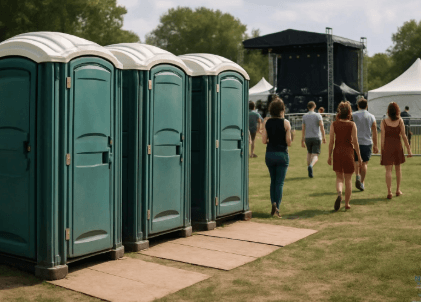
Portable toilets and restroom trailers must be positioned strategically to match how attendees move, gather, and interact throughout the event space. Simply placing units in a single centralized location often leads to congestion, long lines, and inefficient use of available facilities.
By taking a more thoughtful and structured approach to placement, planners can significantly reduce wait times and improve the overall flow of the event.
Why Restroom Placement Matters More Than Quantity Alone
Many planners focus primarily on the number of restroom units, assuming that more units automatically solve congestion issues. While capacity is important, placement has an equally significant impact on how effectively those units are used.
Even a well-sized setup can experience long lines if units are clustered in one area while other parts of the event remain underserved.
Attendees tend to use the closest available facilities rather than walking across the event grounds. This behavior creates uneven demand and can overwhelm certain locations while others remain underutilized.
Effective placement ensures that usage is distributed evenly, reducing pressure on any single group of units.
Balancing quantity with smart placement is essential for minimizing lines.
Distributing Units Based on Crowd Movement Patterns
Understanding how attendees move through the event is key to effective restroom placement. High-traffic areas such as main stages, food zones, and entry points naturally attract larger crowds.
Placing restrooms near these areas helps meet demand, but clustering too many units in one location can still lead to congestion.
Instead, planners should distribute units along natural movement paths. This includes placing restrooms at intervals along walkways and near transition points where attendees are likely to pass.
By aligning placement with movement patterns, planners can reduce the need for attendees to travel long distances while also preventing overcrowding.
Distribution is more effective than concentration when managing large crowds.
Using Multiple Smaller Clusters Instead of One Large Area
A common mistake at festivals is creating one large restroom area. While this may seem efficient, it often results in long lines and heavy congestion in a single location.
Breaking units into multiple smaller clusters across the event grounds provides several advantages.
Attendees can access facilities more quickly without traveling far, and demand is spread more evenly across the site.
This approach also reduces the visual impact of large crowds gathering in one area, improving the overall flow and appearance of the event.
Smaller clusters create a more balanced and accessible system.
Distributed placement supports better crowd management.
Positioning Units Near High-Demand Zones Without Causing Congestion
Certain areas of an event will always experience higher demand for restrooms. These include food and beverage zones, main stages, and areas with extended dwell time.
Placing units near these zones is essential, but they must be positioned carefully to avoid creating bottlenecks.
Units should be close enough to be convenient but not so close that lines spill into main walkways or interfere with other activities.
Creating slight offsets from high-traffic areas allows for easier access while maintaining clear pathways.
Thoughtful positioning helps manage demand without disrupting flow.
Balancing proximity and accessibility is key.
Incorporating Restroom Trailers for Strategic Relief Points
Restroom trailers can play an important role in reducing lines when used strategically. These units often provide multiple stalls in a single location and can handle higher volumes of traffic.
Placing restroom trailers in key areas, such as VIP sections or central gathering points, helps absorb peak demand and reduce pressure on standard portable units.
Working with providers such as Rent Porta Johns allows planners to incorporate a mix of unit types that supports both capacity and placement strategy.
Using trailers as relief points improves overall system efficiency.
A balanced mix of units helps manage varying demand levels.
Planning for Peak Usage Times
Restroom demand is not constant throughout an event. Peak times often occur between performances, after meals, or during major schedule transitions.
Placement strategies should account for these surges by ensuring that high-demand areas have sufficient coverage.
In addition to placement, planners can monitor usage patterns and adjust staffing or servicing schedules to support peak times.
Anticipating demand helps prevent lines from forming in the first place.
Planning for peaks is essential for maintaining a smooth experience.
Maintaining Clear Access and Queue Space
Even well-placed restrooms can become problematic if there is not enough space for lines to form. Crowded queues can spill into walkways, block access, and create safety concerns.
Planners should ensure that each restroom cluster has adequate space for queuing without interfering with nearby activities.
This includes considering the layout of the surrounding area and how lines will form during busy periods.
Clear access helps maintain order and prevents congestion from spreading.
Queue management is an important part of placement strategy.
See also: How Can Storage Units Help During A Home Move Or Major Declutter?
Adapting Placement to Event Layout and Terrain
Outdoor events often take place on varied terrain, including fields, parks, or uneven ground. These conditions can affect how restrooms are placed and accessed.
Planners should consider how terrain influences movement and accessibility. Units should be placed on stable ground and in locations that are easy for attendees to reach.
In larger events, placement may need to adapt to different zones, such as camping areas, vendor sections, and performance spaces.
Tailoring placement to the layout ensures that all areas are adequately served.
Flexibility improves overall effectiveness.
Monitoring and Adjusting During the Event
Even with careful planning, real-time adjustments may be necessary. Crowd behavior, weather conditions, and attendance levels can all influence restroom usage.
Event staff should monitor high-traffic areas and identify any locations where lines are forming.
If needed, adjustments can be made by redirecting attendees, adding temporary signage, or coordinating servicing to improve conditions.
Being responsive helps maintain a positive experience throughout the event.
Adaptability is key to managing dynamic environments.
Avoiding Common Placement Mistakes
Several common mistakes can lead to long lines and poor restroom performance. These include placing too many units in one location, ignoring crowd movement patterns, and failing to provide enough space for queues.
Another frequent issue is placing restrooms too far from key activity areas, which discourages use and leads to uneven demand.
Avoiding these mistakes requires a thoughtful approach that considers both capacity and placement.
Planning ahead helps prevent issues before they arise.
Attention to detail makes a significant difference.
Improving Attendee Experience Through Better Planning
Effective restroom placement has a direct impact on attendee satisfaction. When facilities are easy to find, accessible, and free of long lines, guests can focus on enjoying the event.
Reducing wait times improves crowd flow, minimizes frustration, and contributes to a more positive overall experience.
Event planners who prioritize sanitation planning gain an advantage in delivering successful events.
Small improvements in placement can have a large impact on perception.
Efficiency enhances enjoyment.
Restroom placement is one of the most important factors in managing lines at festivals and outdoor events. While the number of units is important, how they are distributed across the event space plays an even greater role in determining efficiency.
By aligning placement with crowd movement, using multiple clusters, and incorporating restroom trailers strategically, planners can reduce congestion and improve accessibility. Monitoring conditions and adapting as needed further supports a smooth experience.
When restroom planning is approached with care and attention to detail, it becomes a key contributor to a well-organized and successful event.